WhatsApp
 Eric.wang@ltzzc.com
 0086-379-69950051

Slewing Bearings Selection and Maintenance Guide for Port Cranes
I. The Role of Slewing Bearings in Port Cranes
1.1 What is a slewing bearing?
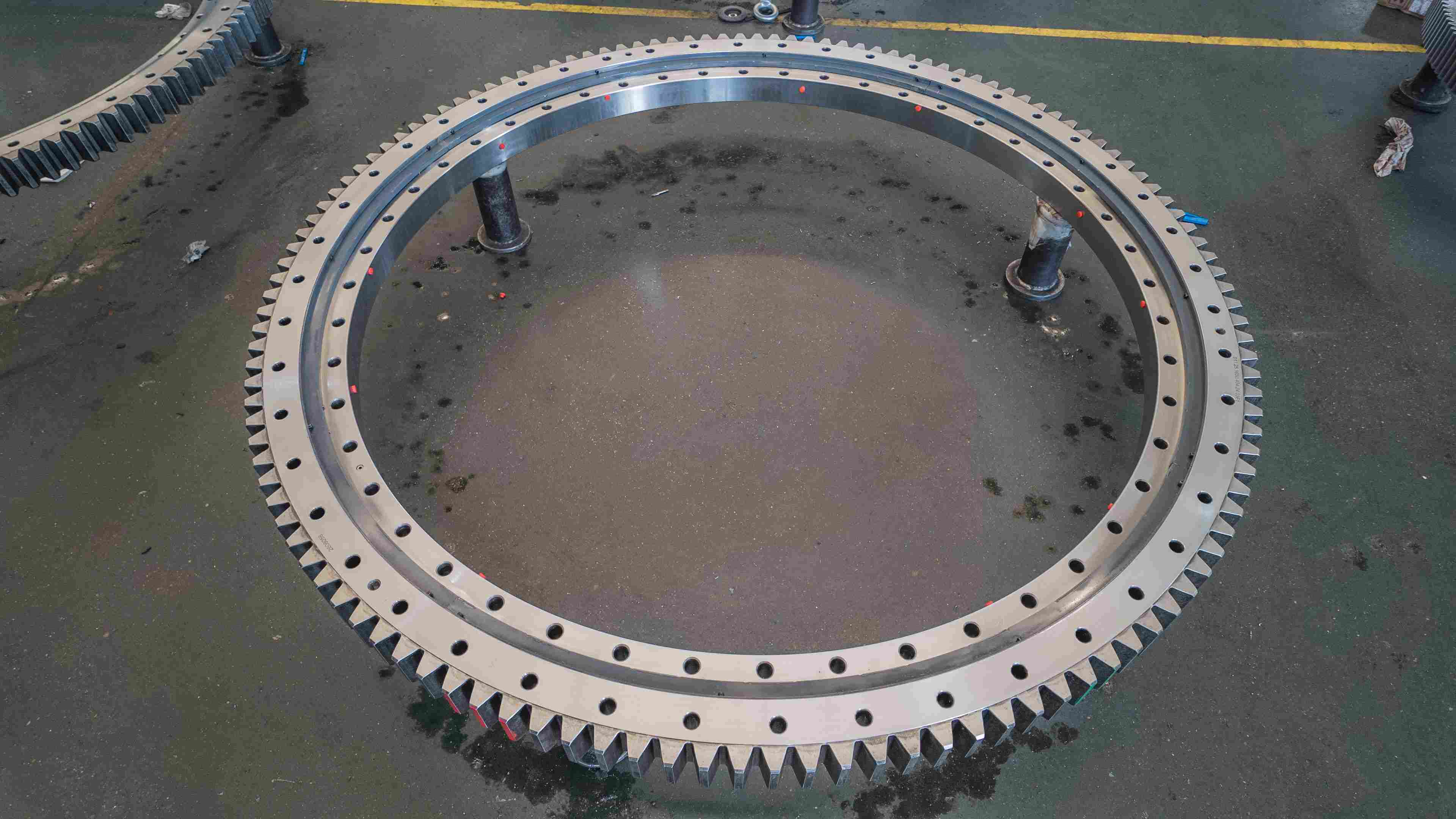
A slewing bearing is a large-diameter, heavy-duty bearing capable of 360-degree rotation while simultaneously withstanding axial loads, radial loads, and overturning moments. Due to their large size and high load-bearing capacity, slewing bearings are widely used in various types of heavy machinery, such as:
* Port cranes
* Excavators
* Shield tunneling machines
* Wind turbines
* Construction equipment
* Marine engineering equipment
In port crane systems, the slewing bearing is typically installed between the crane's base platform and the rotating superstructure. It enables the crane to rotate smoothly while performing heavy-load lifting operations.
1.2 Why do port cranes require heavy-duty slewing bearings?
Port cranes must rotate while handling heavy loads and operate under complex conditions—such as exposure to seawater corrosion and temperature fluctuations—placing extremely high demands on the slewing bearing.
Slewing bearings suitable for port cranes must possess the following characteristics:
High load-bearing capacity
Port cranes must support the weight of the boom and the machine itself, in addition to the heavy loads being lifted; the slewing bearing—a critical rotating component—bears all these forces.
High resistance to overturning moments
Lifting heavy loads at a wide operating radius generates immense overturning moments. Under such conditions, the slewing bearing must maintain stable contact between the rolling elements and the raceways.
Long service life
For large-scale port equipment, unexpected downtime can result in significant economic losses. With proper maintenance, high-quality slewing bearings should ensure years of reliable operation.
Environmental adaptability
Port environments involve humidity, salinity, and corrosive substances. Consequently, sealing systems, surface treatment processes, and lubrication methods are critical factors influencing the bearing's durability.
II. How to Select the Right Slewing Bearing for Cranes
2.1 Consider Operating Speed
Slewing bearings for port cranes typically operate at low speeds but require frequent starting and stopping. Key factors such as slewing frequency, acceleration/deceleration characteristics, and operating duration must be prioritized during selection; bearing structure and lubrication designs should be tailored to actual operating conditions.
2.2 Consider Mounting Dimensions
Before purchasing a slewing bearing, the following parameters must be confirmed: outer diameter, inner diameter, mounting hole locations, gear specifications, and height requirements. Precise dimensions are essential to minimize risk.
2.3 Consider Gear Requirements
Many crane slewing bearings are equipped with external or internal gear rings for the slewing drive system. Gear precision is critical; selection must account for gear module, accuracy, torque, and lubrication. For heavy-duty port cranes, gear precision and surface hardness are vital factors influencing long-term performance.
III. Common Causes of Failure in Port Crane Slewing Bearings
3.1 Insufficient or Improper Lubrication
Lubrication is a critical aspect of slewing bearing maintenance. A proper lubrication strategy reduces friction between the rolling elements and raceways, ensures smooth rotation, and extends the bearing's service life.
During port crane operations, slewing bearings are subjected to repeated heavy loads and frequent rotation cycles. Insufficient lubrication can lead to the following issues:
Increased friction between rolling elements and raceways
Elevated operating temperatures
Accelerated raceway wear
Abnormal noise during rotation
Reduced bearing service life
Best practices for port crane bearing lubrication:
Select grease suitable for heavy-load conditions
Adhere to a regular lubrication schedule
Ensure grease reaches all lubrication points
Monitor grease condition during inspections
3.2 Overloading and Improper Operation
Port cranes are primarily responsible for lifting heavy loads; selecting a slewing bearing requires calculating both working loads and impact loads. Lifting loads that exceed rated capacities can damage the bearing's structural integrity.
3.3 Improper Installation
Proper installation is essential for the crane's overall operation. Installation quality directly affects load distribution, rotational performance, bearing lifespan, and gear operation. If the mounting surface lacks sufficient flatness, the bearing may undergo uneven deformation. LTZC provides installation and maintenance manuals for its slewing bearings and can dispatch engineers to provide on-site installation guidance upon request.
3.4 Corrosion and Environmental Contamination
Port cranes operate in highly corrosive environments. Salt spray, humidity, and industrial dust can all impair bearing performance. To enhance corrosion resistance, LTZC offers anti-corrosion solutions, applying treatments such as black oxide coating, galvanizing, or painting to the bearing surfaces.
IV. How to Maintain Crane Slewing Bearings
4.1 Establish a Regular Lubrication Schedule
A standardized lubrication schedule should be established based on actual operating conditions. Conduct regular maintenance and keep records regarding grease condition, signs of leakage, and temperature fluctuations; regular lubrication ensures smooth rotation, reduces friction, and extends the service life of the slewing bearing.
4.2 Regularly Inspect Mounting Bolts
Periodically inspect the slewing bearing bolts for looseness, corrosion, or deformation, and perform maintenance promptly if any such issues are found.
4.3 Monitor Bearing Clearance and Wear
Over time, continuous operation may lead to internal wear between the rolling elements and the raceways.
A gradual increase in clearance may indicate normal wear, whereas a sudden change could signal severe internal damage.
Contact LTZC for custom crane bearings.